
Meteor strikes—the stuff of legends, the heart of scientific inquiry, and the spine-chilling subjects of many a blockbuster and cult classic. Whether you’re a cinephile, a science nerd, or simply someone who gazes at the stars and wonders, there’s something undeniable about the allure of meteors. These celestial wanderers remind us of our cosmic origins and the fleeting beauty of the universe. So, let’s dive deep into this captivating topic that continues to inspire films, documentaries, and discussions among us film enthusiasts.
1. Top 7 Reasons Meteor Strikes Hold Our Fascination
1.1 The Cosmic Connection
Humans have always gazed at the night sky, pondering their place in the cosmos. Meteor strikes connect us to the broader universe; they often originate from asteroids or comets, remnants from the early solar system. Renowned astronomers at NASA’s Jet Propulsion Laboratory underline that studying these cosmic visitors can give us insight into the birth of our own celestial neighborhood. Just like in Christopher Nolan’s Interstellar, where space exploration drives the narrative, meteors similarly drive home our humility and curiosity about the universe.
1.2 Stray Objects in the Night Sky
Have you ever watched a meteor streak across the sky and felt that mix of awe and nostalgia? It’s like a wild, cosmic reminder of life’s randomness. Events like the Perseid meteor shower—where meteors come down to play at a stunning rate of up to 60 per hour—are like nature’s own fireworks, often prompting spontaneous gatherings. These moments reinforce social bonds, making us share the thrill of gazing into the unknown together. It’s one night where we all put down our phones to experience the wonder live!
1.3 The Retro Appeal of Meteor Shows
Meteor showers evoke a retro charm that harks back to simpler times. Just think about those nights spent outdoors, lying in sleeping bags, with friends peering up in wonder. Popular meteor shower events, like the annual Perseids and Geminids, continue to pull in crowds. In 2025, millions around the globe made time to marvel at this celestial spectacle, immersing themselves in nostalgia while forging new memories with friends and family.
1.4 Spotlight on Cultural Narratives
Meteors haven’t just been rocks zipping through the atmosphere; they’ve woven their way into human history and mythology. Ancient civilizations often viewed these celestial phenomena as omens or divine messages. Take Japan, where samurai culture revered meteors as manifestations of divine spirits. Nowadays, filmmakers often use meteors as potent symbols; for instance, in The Planets, meteors serve as harbingers of chaos and change. It’s no wonder folks like Laila Robins find themselves inspired by these ethereal narratives.
1.5 The Channel Between Science and Art
Meteors inspire vibrant discussions at the intersection of science and the arts. Authors and poets, such as Pablo Neruda, have penned beautiful works inspired by these cosmic events, reflecting on life, existence, and our place in the universe. This mix cultivates a rich tapestry of human experience, revealing how both scientific inquiry and artistic expression are driven by a simple yet profound curiosity.
1.6 Anonymous Actors of Climate Change
Meteors are not just beautiful—they serve as powerful reminders of our planet’s vulnerabilities. Larger meteor impacts have the potential to trigger climate shifts, reminiscent of the mass extinction event that wiped out dinosaurs. This daunting reality prompts necessary chatter about our world’s climate future. Discussions on planetary defense arise, displaying how these elusive celestial objects catalyze critical thinking about climate change and international cooperation.
1.7 Sirius: The Brightest Star’s Influence
From way back when, the star Sirius has held a special place in human observation. Often linked to meteor activity, ancient cultures utilized its positioning to create calendars and anticipate meteor showers. With Sirius’s steadfast presence in the night sky, researchers encounter a unique blend of astrology and astronomy that enlightens both scientists and historians today. It’s remarkable how this age-old connection continues to influence our understanding of meteors.

2. The Physics of Meteor Strikes: A Closer Look
Understanding the physics behind meteors allows us to appreciate their true beauty and power. As meteors enter Earth’s atmosphere, they zoom in at astonishing speeds—ranging from 11 to 72 kilometers per second! The resultant friction against atmospheric gases is what creates those dazzling fireballs we all can’t help but stare at. Something to appreciate even more? Scientists, including teams from the European Space Agency, analyze impact events to grasp not just their destructive capabilities but also what they might unveil about our universe.
3. Cultural and Scientific Ramifications of Meteor Strikes
Meteor strikes aren’t just eye candy; they carry profound implications for our planet. The Chelyabinsk meteor of 2013 is a prime example. This event caused extensive damage but also ignited a fresh surge in research focused on meteors and planetary defense strategies. It’s pretty wild to see how a serendipitous cosmic occurrence can result in scientific advancements and international collaboration.
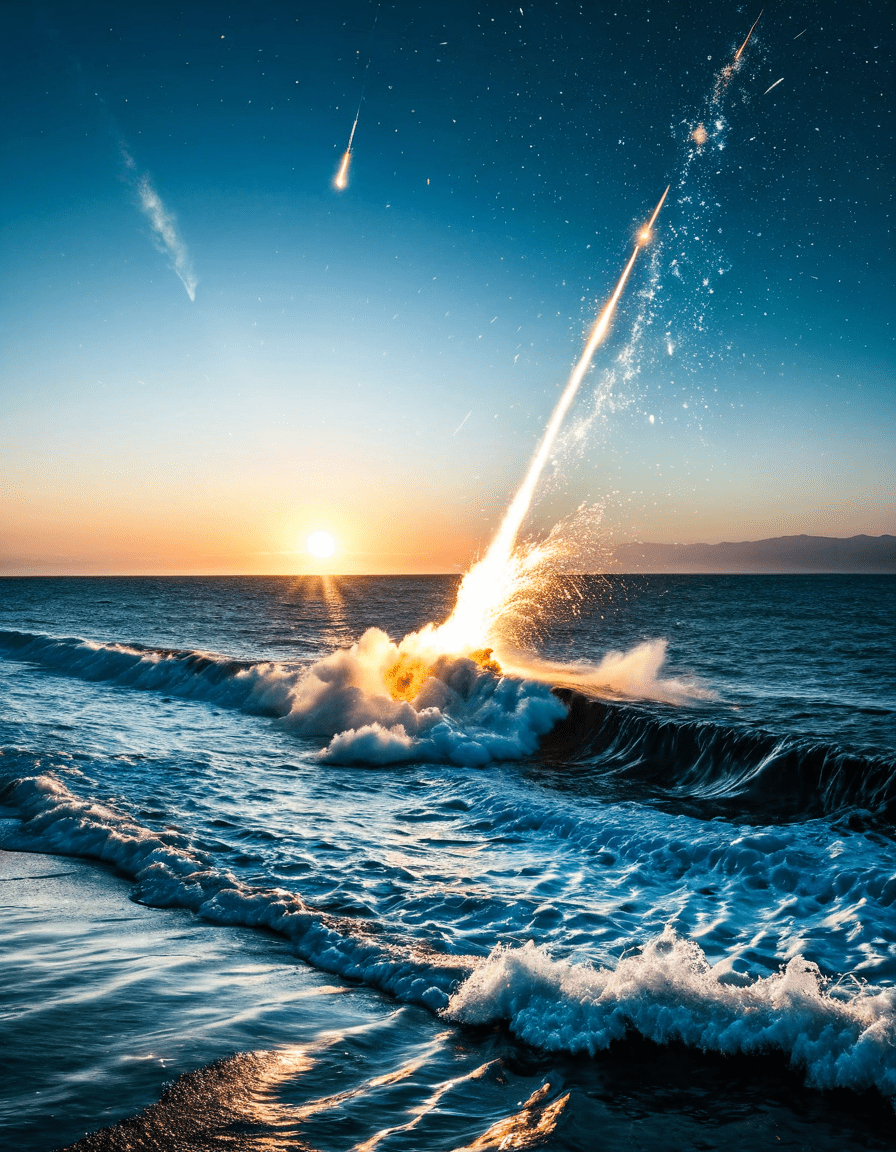
4. Harnessing Meteor Technology: Impacts on Future Exploration
Technology related to meteor observation has leaped forward, reshaping how we understand these celestial visitors. Initiatives like the Meteorite Recovery Program are making it easier for scientists to catalog and study meteorites on Earth. This data is vital for future missions to Mars and beyond, helping to unearth insights about extraterrestrial materials that may pave the way for human exploration.
5. Innovative Perspectives on Meteor Strikes
Looking ahead, both artists and scientists are getting creative with how they interpret and interact with meteor phenomena. With immersive experiences popping up in planetariums and interactive apps that track meteor showers, there’s an air of excitement brewing. These initiatives encourage more people to appreciate and connect with the wonders of meteors, ensuring their captivating nature endures for generations to come.
In sum, meteor strikes illuminate not only the night sky but also our existential queries. The beauty lies not just in their visual spectacle but in the deeper conundrums they provoke about our existence, our Earth’s fate, and our understanding of the cosmos. So the next time you see a meteor, remember—it’s not just a fleeting streak; it’s a connection to the stars, the past, and perhaps, the future of humanity itself.
Meteor Mania: Captivating Insights into Celestial Visitors
The Fascinating Origins of Meteors
Did you know that meteors start their journey as tiny particles in space? These cosmic tourists, often just grains of dust, can create spectacular sights when they enter Earth’s atmosphere. At speeds that can reach up to 160,000 miles per hour, they heat up and glow brightly, producing what we recognize as a shooting star. It’s amazing to think that some meteors originate from comets or even asteroids, chunking off bits of their cores. This stuff is cosmic gold! In fact, if you’ve ever seen the animated The Simpsons Characters gazing up at the night sky, you might be reminded that there’s more out there than just our world.
Memorable Meteor Events
One of the most well-known meteor showers is the Perseids, which peaks every August. This annual occurrence has been observed for over 2,000 years! Easy viewing locations, like the Baltimore airport map area’s clear skies, can make for a thrilling night of stargazing. Not only is this phenomenon a treat for your eyes, but it also leads astronomers to exciting discoveries about our solar system. In fact, many believe that meteor showers contribute to our understanding of the cosmos, much like how the Parker mission is shedding light on solar winds.
An Interesting Meteor Trivia
Here’s a fun fact: the largest meteorite ever found on Earth weighed a staggering 66 tons! Discovered in Namibia, the Hoba meteorite isn’t just heavy—it’s also the only known meteorite that’s still sitting precisely where it landed over 80,000 years ago! Nature sure has a knack for drama. And speaking of earthly wonders, did you ever think about how slowly tumorous growths can appear in dogs, such as Photos Of canine mast cell Tumors? Just like meteors can feel like an overnight sensation, some earthly health concerns creep in more quietly, reminding us of life’s unpredictable nature.
So, the next time you catch a glimpse of a meteor shower, remember that these spectacular celestial events are not only about the immediate thrill but are deeply woven into the fabric of our universe’s history. Whether they’re breaking through Earth’s atmosphere or providing insights through ongoing studies, meteors continue to captivate us with their cosmic tales.